#68: Morocco, January 2010
Casablanca, Fes, Marrakech, Essaouira
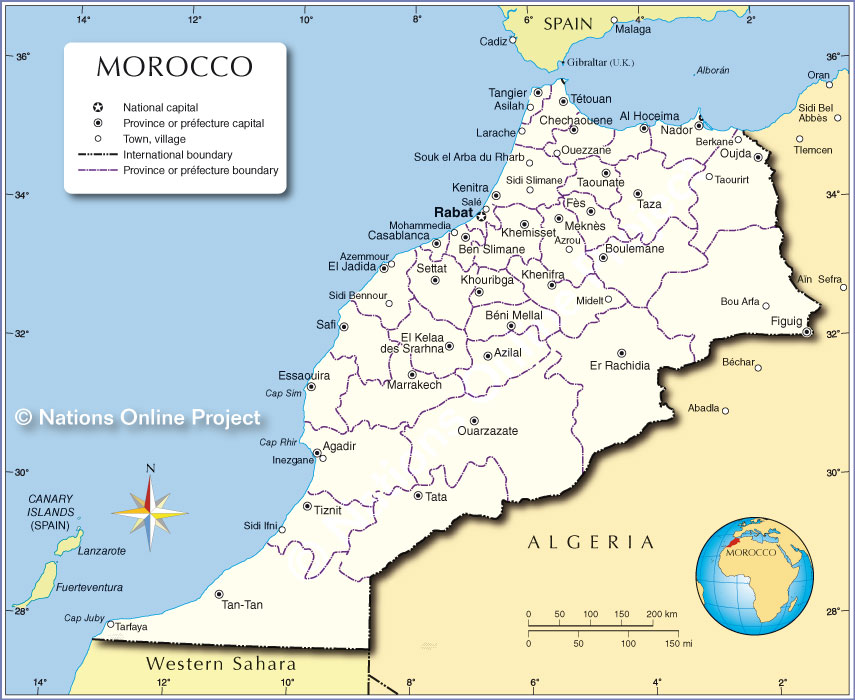
Coral Marrakech, cafe-au-lait Fes, snow-white Essaouira — the colors of Morocco. A feast for the eyes, a cacophony to the ears, an array of tastes for the palate.
January 10th found us leaving and arriving in rain. In between, the skies were clear and the air smooth, but taking off and landing were a bit bumpy. More than pleased to be met at the Casablanca Airport, as arranged, by a charming young man who whisked us off to the Hotel Mansour, where we had a tasty lunch, a nap, a clean-up and a re-pack in preparation for our departure by train early the next morning.
[A side note: As you probably know, the Casablanca of Humphrey Bogart, Ingrid Bergman and Rick’s Cafe are no more, if they ever were. The city is now mostly a place to pass through on the way to somewhere else. Come to think of it, the transitory nature of Casablanca was also a main theme of the forties film. ]
The trains and stations in Morocco are pretty much of European standard, so we decided to try second class, which we’d been told was fine for the five-hour trip to the ancient royal capital of Fes (“fez”). The first three hours saw us on the flat coastal plain, passing groves of orange, olive and eucalyptus trees interspersed with rather barren flats. After Rabat, the train headed inland and up through a narrow defile widened to accommodate a winding road and our train track. Below, we could see giant rocks washed by the river dropping down from the mountains. Not long after, a young man sat down in the seat opposite and proceeded to tell us all about himself — a well-traveled medical student from a wealthy family. He ended up by offering to show us “his” Fes. We later learned that our instincts were correct — these young guys travel the rails trying to find gullible tourists whom they can bilk, though not rob, by claiming to offer an experience of the “real” Morocco.
Once in Fes, we had some difficulty finding a taxi driver who knew where our small hotel was. The one who said he knew dropped us at the wrong gate of the walled city, so we traipsed through rain and mud along yard-wide, cobbled streets behind two porters and a push-cart across a third of the town before arriving at a nondescript wooden door with a small plaque at the end of a dead-end lane. Oh dear, we couldn’t help but wonder, what are we in for????
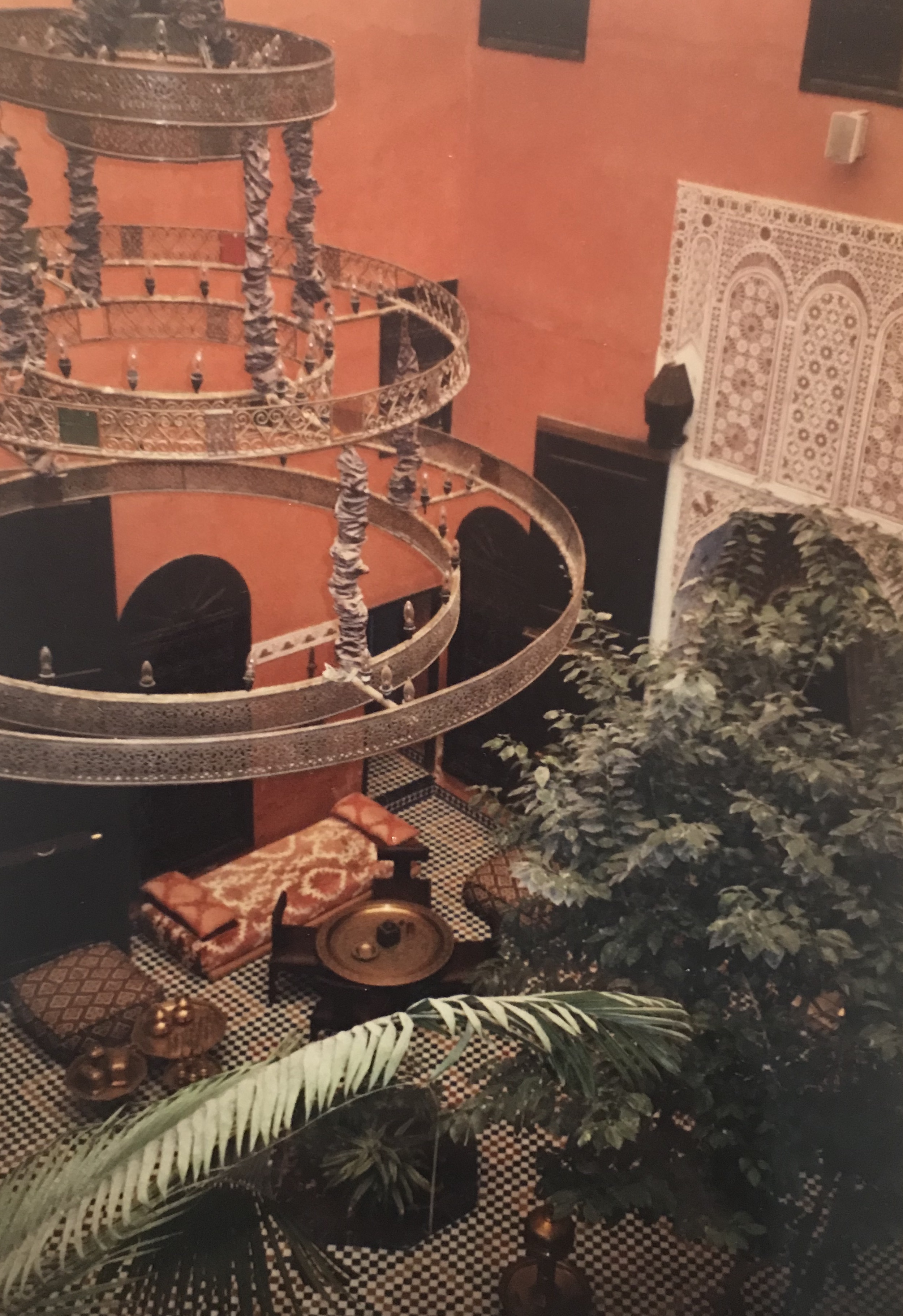
What we were in for was one of the best experiences of our trip. A young man, dressed in a black, hooded burnoose, opened the door into a courtyard of colorful mosaics with trees and plants reaching for the canopy four stories above. On all four sides were shallow, wide alcoves furnished with banquettes in local fabrics and low tables waiting to welcome us for a lunch of chicken tagine with preserved lemons. All in all, a perfect introduction to the culture, architecture, decor and food of Fes.
That lunch was just the beginning of one meal more appetizing that the rest. While we stayed at the Dar Anebar, an upper-class family riad (house with courtyard) converted to an inn, we ate so well that we were spoiled for the rest of the trip, wherein we had good food, but not the great food we enjoyed there. As we toured Fes, we ate lunch in local restaurants, but breakfast and dinner were so tasty at our inn that we had no desire to spend an evening in another restaurant, not even the famous five-star Palais Jamai.
Our room on the second floor stretched the entire length of that side of the house, with shuttered windows opening onto the courtyard, a giant bathroom, dressing room, and bedroom-cum-sitting room with all mod cons, including individually controlled heating units, much appreciated in the cold rain.
That evening, the owner — the son of the family whose house it had been and who himself had overseen the conversion — came by to see if everything was to our liking. How easy to respond in the positive! He said he knew a reputable guide and recommended we have one for a least the first day because of the city’s labyrinthine streets. Aziz Zgani, arrived the next morning wearing the nearly ubiquitous burnoose (this time a gray one). Not only was he a knowledgeable and flexible escort, he was also a lovely man. One of Morocco’s officially licensed guides, he was university-educated and government-trained to understand and meet foreigners’ needs. We ended up spending all three days in Fes with him and counted ourselves lucky to have Aziz as a window on its fascinating history and culture.
Imagine an adobe city of 70,000, cascading down two hillsides into a ravine, surrounded by high, crenelated walls of sun-dried brick, with here and there the green-glazed roofs of mosques, medersas (schools for religious scholars and leaders), and the oldest university in the world. Inside are narrow lanes intertwined like a cobweb woven by a drunken spider. Add to this configuration that the streets are teaming with men, women and children, laden donkeys and mules, pushcarts and porters. It would take weeks to learn your way around, so we were the beneficiaries of Aziz’s childhood spent running all over town.
Founded in 789, Fes was in serious decline once the wealthier citizens began moving to the modern city built outside the walls after the French Protectorate was established in 1912. The old city was saved when UNESCO declared it a World Heritage Site. The funds provided by this program were soon matched by those of local folk who revered their birthright and who wanted to restore the city’s fountains and courtyards, caravanserais and schools, mosques and synagogues.
Reminder: a caravanserai is where men and animals stop to rest and recuperate. As for synagogues, Fes, like all royal Moroccan cities, always had a large community of Jews, who were mostly jewelers and other skilled artisans. So important to the sultan were their skills that their quarter was always just outside the palace walls. When the Vichy French Government demanded that the sultan hand over the Jews for deportation, He responded, “Jews? We have no Jews here, only Moroccans. If you wish to take a Moroccan, take me.”
During our three days in Fes, we visited museums and medersas; peeked through doors of mosques and the Karaouiyine (kah-rah-we-yeen) University; wrinkled our noses at the acre of leather-tanning vats of red, purple, yellow, brown and blue; shopped the souks and consumed our daily noss-noss (half coffee/half hot milk). Each lunchtime, Aziz took us through another nondescript door into a different mosaic-walled restaurant for a traditional meal of pigeon pie or lamb stew or couscous, always preceded by a selection of salads made of cooked vegetables and ending with sliced oranges drizzled with orange-flower water and cinnamon (hard to image how such a simple, non-chocolate dessert can be so delicious).
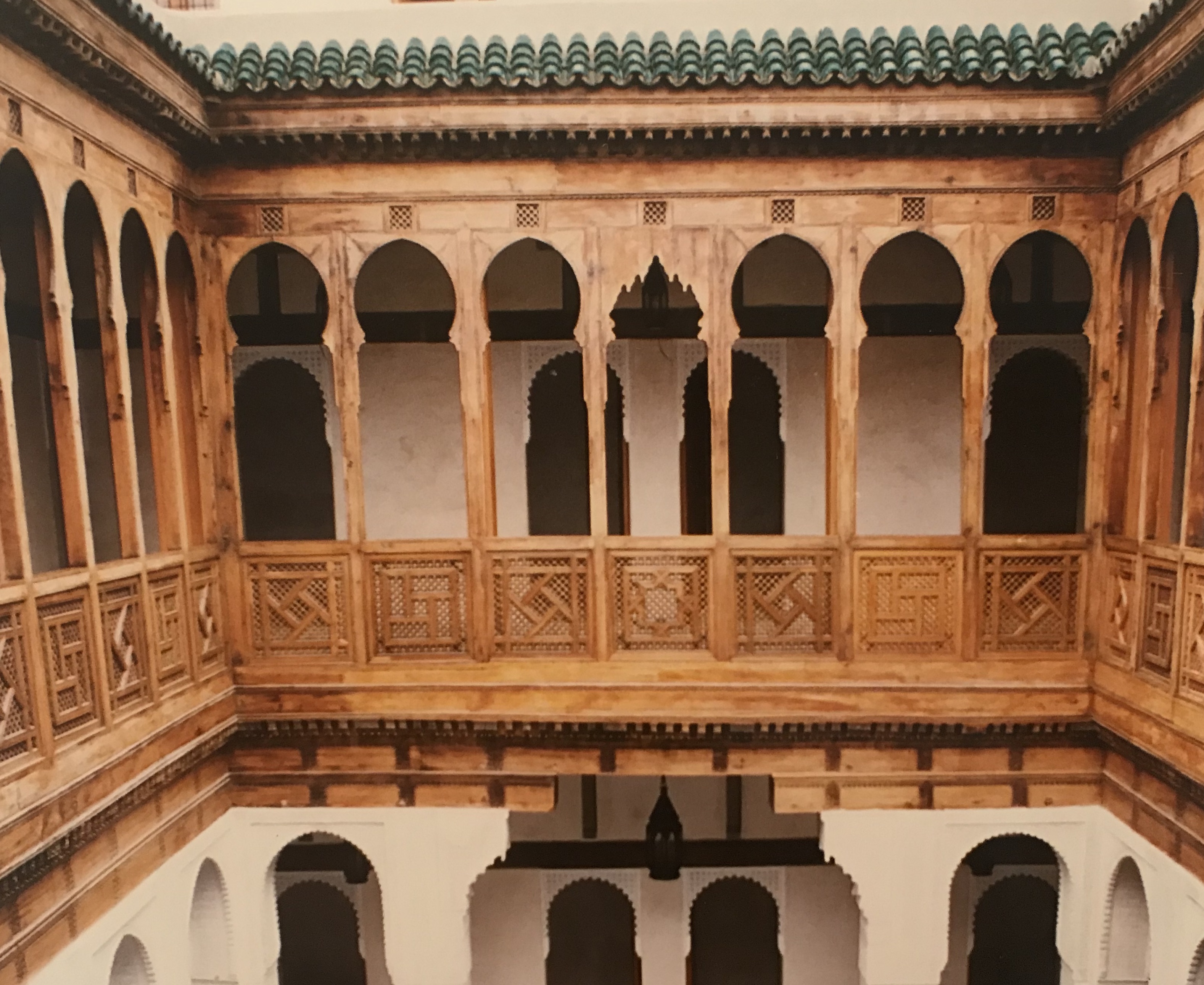
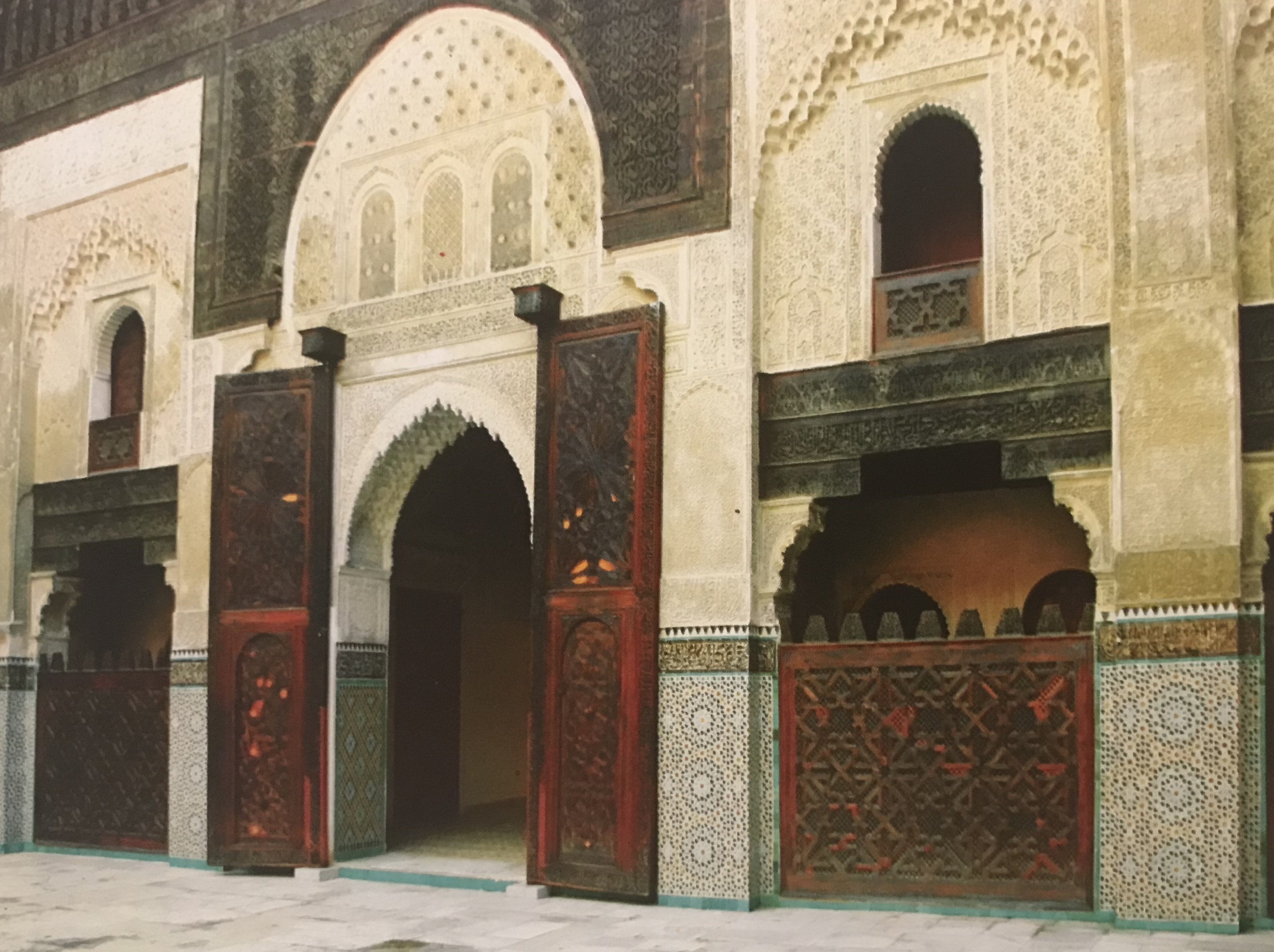
The cultural highlights for me were the Fondouk el-Nejjarine, a caravanserai converted into a museum, and the El-Attarine and Bousinania Medersas. The museum, beautifully restored with UNESCO and private funds, now houses a wonderful collection of all things made of wood — intricately carved doors, sedan chairs, pulpits, chests, cabinets, lintels and all sorts of implements. The two medersas, also preserved with this funding, are breath-taking in both their simplicity and their intricacy. Simplicity, because the decor is predominately deeply-carved plasterwork and cedar. The intricacy comes in the carving, which is so pains-taking that it is almost impossible to imagine how many artists and how much time it must have taken to complete. We were literally awe-struck.
We found lots of nice mementos for Amelia friends and didn’t forget that, if all goes well, we’ll have a new house in 2010. With Aziz’s help, we visited a rug-co-op, where we looked at scores of different types, finally selecting one that suited pocketbook and the quality of the California light. It was sewn into a plastic carry-all before our eyes, and we were invited to write our name and address on it, so we’d know for sure that we’d get the rug we’d chosen. Thanks to long-ago Afghan days, I was able to write my name in Arabic script as well as in English, thus earning a couple points from all parties. When we asked if it could be shipped to our Casablanca hotel for our arrival some ten days later, they said they did it all the time, and Aziz vouched for their integrity. So we left it all in their hands and took off for Marrakech the next morning. (Please note: despite its spelling, the city’s name is pronounced as if it were written “Marrakesh.”)
Given that it would be an eight-hour trip, that the toilet in second class had left more than a little to be desired, that the bilking boys don’t enter first class, and that upgraded tickets cost only a few dollars more, we elected to try the first-class car. It didn’t take long to realize we’d done the right thing.
On the way back down the defile, the rain-swollen river no longer gently washed the rocks but plunged through them, creating a mile-long cascade of churning brown water.
Marrakech was a disappointment. Let me say that now and get it over with. When we were young, it was a fabled place, and we’d always carried the desire to see it. But the intervening 40+ years of mass tourism have just about ruined it. Were I to go to Morocco again, I’d stay only two nights/one day there and then move on; for example, we could have visited the distinctive villages of the Atlas Mountains (which we’d struck off our list for lack of time).
That having been said, we enjoyed seeing Marakech’s much-photographed, reddish, adobe walls (the color due to iron oxide??), as well as the various palaces and museums, even though they hadn’t been as well-maintained/-restored as their counterparts in Fes. We liked the half-day spent outside the city visiting some royal gardens, and for the most part, we liked Riad Noga, a complex of three traditional houses connected to make a small inn with two courtyards. However, I did come down with food-poisoning the morning after our first dinner there. Did I get it at the Riad, on the train or from the local noss-noss? Hard to know, but it sure took me out of the picture for several hours of voiding my system, plus the next day to get my strength back.
Let me move on to Essaouira (ess-ah-we-ra), which was an absolute delight. A three-hour ride on a modern Volvo bus brought us to the stone-walled city of lime-washed buildings perched on Morocco’s Atlantic coast. The Phoenicians established a trading base here in the 7th century BC in order to acquire the mollusks needed for the purple dye that only emperors and the very wealthy could afford. The ancient Romans followed suit, and the Portuguese organized a trading and military bridgehead here in the 15th century AD. The current town was created in 1760 by the then-sultan with the help of a renowned French architect. Not as large as either Fes or Marrakech, it retains its traditional character, despite being a magnet for surfing of all types, thanks to the perpetual trade winds.
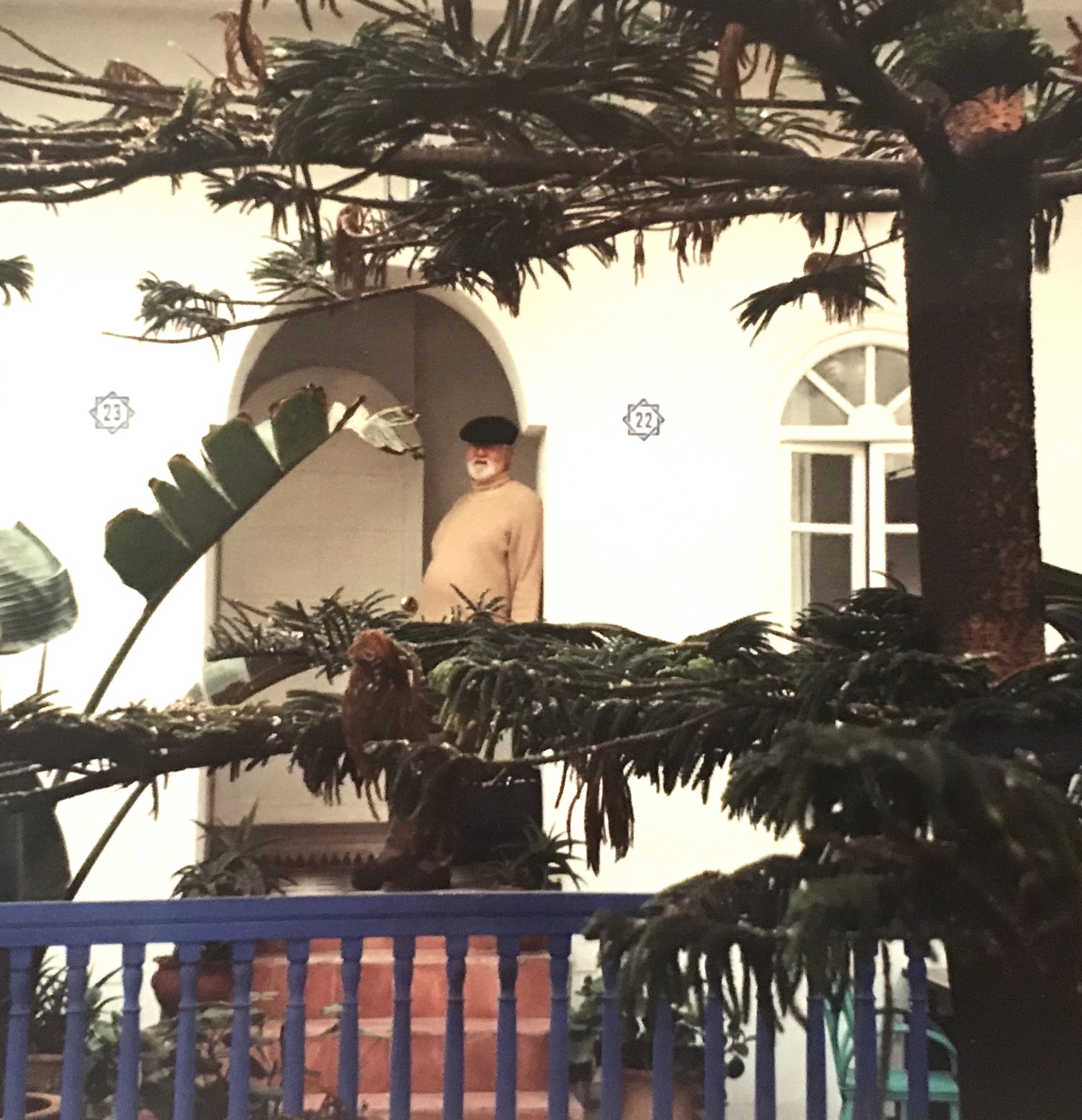 Once again, we had a wonderful hotel, Villa Maroc, consisting of four white-washed riads connected with up-stairs and down-stairs, little corridors and alcoves, stone pillars and blue banisters and all manner of touches that drew us here and there to see it all. Because there weren’t many guests this time of year, we were upgraded to a suite with a view of the port and the sea beyond. Outside our second-floor doorway was a Norfolk pine with, as described by Russell, “sparrows roosting like ornaments on a Christmas tree.”
[Another movie aside: Also staying at the Villa Maroc was a location scout for a film called “Hanna” with Cate Blanchett. We enjoyed our evenings talking about the art and craft of movie-making, but sad to report, they ended up shooting the Moroccan scenes in Spain. Can’t help but wonder if the scout thought his hard work had been wasted.]
What a lot of good seafood we ate and what a lot of nice walks we had in the town, around the old port, exploring the fort and along the shore. The perfect, relaxed ending to a busy two weeks exploring a country that we’d wanted to see since before we met.
And yet the trip was somehow unsatisfying, and we spent time discussing that in Essaouira. Why weren’t we thrilled with Morocco, this place we’d always wanted to visit? Was mass tourism a factor? Probably. Certainly being in Fes and Essaouira on the off-season contributed to our enjoyment of these two cities in comparison with Marrakech, which is packed with group tours even in winter. Perhaps we should have made the trek to Morocco when we and the country’s attractions were decades fresher.
Years ago, when I visited the Taj Mahal, aged 19, I was disappointed because it looked just like all the photos. Nothing to discover. Until I visited the interior with its deeply moving side-by-side tombs. Perhaps that was the reason why we found Marrakech in particular disappointing and Essaouira more interesting. Despite a string of famous visitors from Orson Welles shooting “Hamlet” there in 1949 through Jimi Hendrix and Paul Simon visiting in the 60s, I’d never heard of it until we decided to skip an eight-hour drive into the desert for a hokey camel tour and go on to the West Coast for an extra day.
All these musings made us more self-aware as we think about future trips in our old age. Let’s make sure there’s something to discover; something perhaps not even initially planned. Let’s be open to exploration and adventure even as our bodies won’t let us run and jump and climb the way we used to.
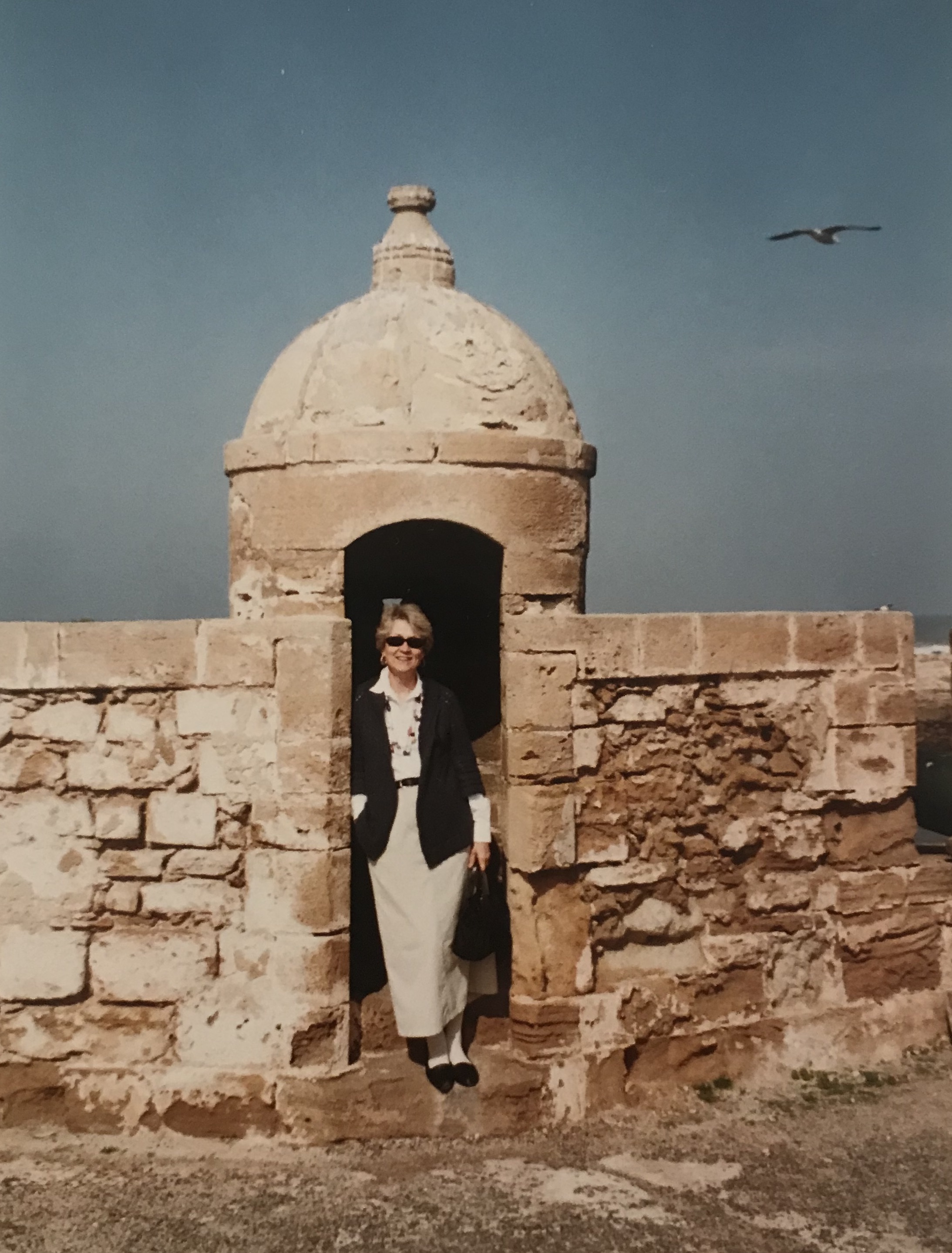
Let me end with a few words about attire. Despite the fact that many women in Morocco don’t wear any form of the veil, I had wanted to be respectful of Muslim culture in my dress. The Koran doesn’t say that women must be veiled, only that men and women should be modestly attired. This caused me a great deal of cogitating before we left home, mostly because my “Muslim-appropriate” clothes are summer-weight, and we’d be there in winter — temps in the teens and low twenties, a fair amount of rain, etc. I ended up with various above-the-ankle clothes from when that was the style, worn with tights, and all was well. Many Moroccan professional women would not be out-of-place in New York or Rome, and many young women wear slim jeans and leather jackets. But I felt just right, halfway between their traditional cousins and the alla moda elite.
And now, finally, how we got home from the West Coast of Morocco:
3 hours by bus from Essaouira to Marrakech
3 hours by train to Casablanca
3 hours by plane to Rome
2 hours by train to Orte
1/2 hour by taxi to our house.
We could have done that in a day, but we took two, returning to the Hotel Mansour in Casablanca, where our rug arrived just as we did! A good trip, if not a great trip, and now we’ve been there, done that, ready to start another one as soon as life will allow.